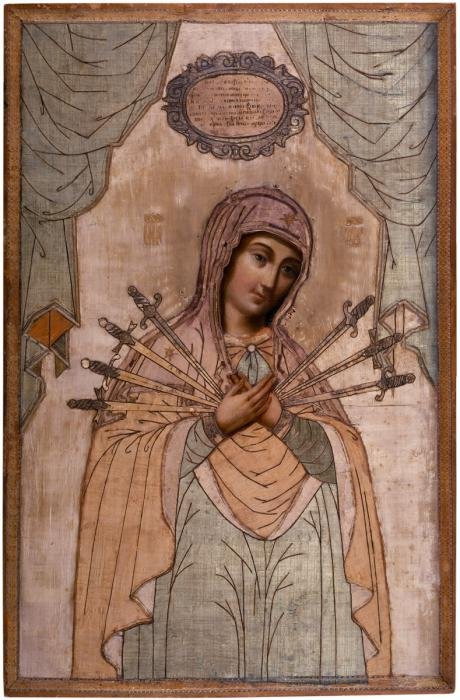
The devotion
“At the cross her station keeping, Stood the mournful Mother weeping, Close to Jesus to the last. Through her heart, his sorrow sharing, All his bitter anguish bearing, Now at length the sword had passed.”
The opening of the Stabat Mater, printed as the Sequence for the September 15 memorial. USCCB, readings for the Memorial of Our Lady of Sorrows.
How to pray it
The beads. They form a ring of seven groups of seven, each group opened by a single bead or a small medal of one sorrow, with three further beads and a medal hanging below for Mary's tears. Traditionally the beads are black. If you do not own a set, you can pray it on your fingers, or on an ordinary rosary by counting seven instead of ten.
- Make the sign of the cross.
- Pray an act of contrition.
- For each of the seven sorrows in turn: name the sorrow, sit with it a moment, then pray one Our Father and seven Hail Marys.
- Pray three Hail Marys in honor of Mary's tears.
- Close with a prayer of your own, or the prayer your parish prints for the feast.
Pray it with others online. The counting is unfamiliar the first time, so it helps to follow a voice. Ascension Press has a filmed pray-along of the whole chaplet, Rosary of the Seven Sorrows of Mary, and Our Sunday Visitor has an audio-only recitation, OSV Prays, for a commute or a quiet room.
Printable prayer card
The seven sorrows
- The prophecy of SimeonLuke 2:34-35. The sword that will pierce her own soul.
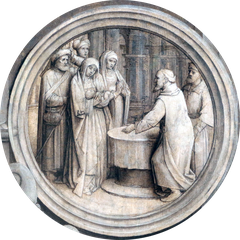
- The flight into EgyptMatthew 2:13-15.
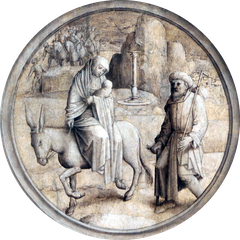
- The loss of the child Jesus in the TempleLuke 2:41-50.
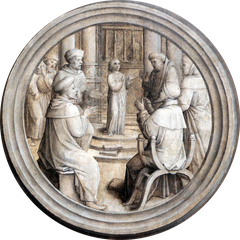
- Meeting Jesus on the road to CalvaryThe Gospels do not name this meeting; it comes down with the Stations of the Cross. The road itself is Luke 23:26-31.
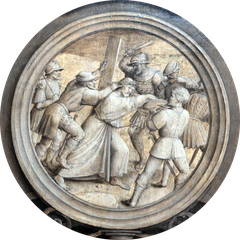
- The CrucifixionJohn 19:25-27, where she is standing.
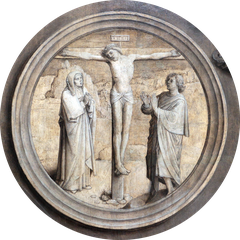
- Receiving his body taken down from the crossJohn 19:38.
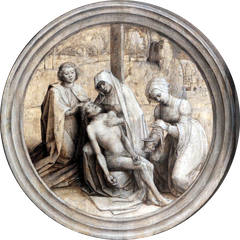
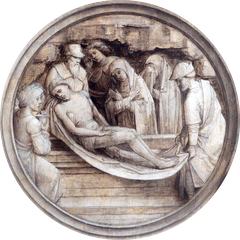
- The burialJohn 19:40-42.
Near you
Your diocese
The Archdiocese of Seattle
- Our Lady of Sorrows, Snoqualmie. 39025 SE Alpha St. The one parish in the archdiocese named for the devotion. A novena to Our Lady of Sorrows runs September 7 through 15, the Feast Day Mass is at 1:00 p.m., and the International Festival is on Sunday, September 13, the nearest Sunday rather than the 15th itself.
- St. Edward, Shelton. The Seven Sorrows Rosary after the noon Mass every Tuesday in September, hosted by the parish Rosary Guild. Rosaries are provided, so you do not need to bring the special rosary to attend.
- St. Gabriel Parish Family, the Peninsula. A Rosary of Our Lady of Seven Sorrows, Sunday, September 13, 8:30 a.m., shared across St. Gabriel, Prince of Peace and St. Nicholas.
The Grotto, Portland. The National Sanctuary of Our Sorrowful Mother, 8840 NE Skidmore St, entrance at NE 85th and Sandy Blvd. The Servite friars, who have kept this chaplet since the 1200s, run it. It is the nearest place to Seattle where this rosary is prayed on a set schedule, about three hours south.
Daily Mass is at noon, Monday through Saturday, in the Chapel of Mary. Sunday Masses are at 8 a.m., 10 a.m. and noon. The rosary is prayed half an hour before every Mass, and on Fridays it is the Rosary of the Seven Sorrows of Mary, the Servite Rosary. So 11:30 a.m. on a Friday is the hour to arrive. For September 15 itself nothing has been posted beyond the usual noon Mass.
Where to get a 7 sorrow rosary: Rugged Rosaries makes one in paracord, and an Italian-made one with black crystal beads is sold on Amazon. The Grotto shop also carries the Via Matris booklet, the Way of Our Sorrowful Mother in seven moments.
The Archdiocese of Portland in Oregon
- Our Lady of Sorrows, Portland. 5239 SE Woodstock Blvd. September 15 is the parish's own name day. Its patroness page quotes Pope John Paul II calling Mary the loving consoler of those touched by the many physical and moral sorrows which afflict and torment humanity, and prints its own opening prayer for the feast, asking that the Church be united with Christ in his suffering and death and so come to share in his rising to new life.
- Sacred Heart and St. Louis, Gervais. Keeps the devotion bilingually all month: during the month of September, we meditate on the Seven Sorrows of Mary, and one way to focus your dedication is to pray the Seven Sorrows Rosary.
- St. Paul, Eugene. A standing Friday devotion, 9:00 to 9:40 a.m., with a prayer to Our Lady of Sorrows printed in the bulletin. Weekly, not tied to the 15th.
The Grotto, Portland. The National Sanctuary of Our Sorrowful Mother, 8840 NE Skidmore St, entrance at NE 85th and Sandy Blvd. The Servite friars, who have kept this chaplet since the 1200s, run it. It is the home of this devotion in the Pacific Northwest.
Daily Mass is at noon, Monday through Saturday, in the Chapel of Mary. Sunday Masses are at 8 a.m., 10 a.m. and noon. The rosary is prayed half an hour before every Mass, and on Fridays it is the Rosary of the Seven Sorrows of Mary, the Servite Rosary. So 11:30 a.m. on a Friday is the hour to arrive. For September 15 itself nothing has been posted beyond the usual noon Mass.
Where to get a 7 sorrow rosary: Rugged Rosaries makes one in paracord, and an Italian-made one with black crystal beads is sold on Amazon. The Grotto shop also carries the Via Matris booklet, the Way of Our Sorrowful Mother in seven moments.
The Diocese of Spokane
- Our Lady of Sorrows, Cusick. 1981 LeClerc Rd N, on the Kalispel Reservation, part of the POCO parish family. The one parish in the diocese named for the devotion. Holy Mass at noon on Tuesday, September 15, the feast day, confirmed by the parish office.
- St. Anne, Medical Lake. A nine day countdown to the feast in the bulletin, September 6 through 15, naming Our Lady of Sorrows as patron of the sorrows our Blessed Mother endured during her life.
The Grotto, Portland. The National Sanctuary of Our Sorrowful Mother, 8840 NE Skidmore St, entrance at NE 85th and Sandy Blvd. The Servite friars, who have kept this chaplet since the 1200s, run it. It is a long drive from Spokane, and still the only place in the region where this rosary is prayed on a published schedule.
Daily Mass is at noon, Monday through Saturday, in the Chapel of Mary. Sunday Masses are at 8 a.m., 10 a.m. and noon. The rosary is prayed half an hour before every Mass, and on Fridays it is the Rosary of the Seven Sorrows of Mary, the Servite Rosary. So 11:30 a.m. on a Friday is the hour to arrive. For September 15 itself nothing has been posted beyond the usual noon Mass.
Where to get a 7 sorrow rosary: Rugged Rosaries makes one in paracord, and an Italian-made one with black crystal beads is sold on Amazon. The Grotto shop also carries the Via Matris booklet, the Way of Our Sorrowful Mother in seven moments.
Where this rosary comes from
This isn't the five-decade rosary. It's its own set of beads: seven groups of seven Hail Marys, each opened with an Our Father and a pause on one of Mary's seven sorrows. Three closing Hail Marys for her tears finish the chaplet. The Servite friars, the same order that runs The Grotto in Portland, have kept this chaplet since the 1200s, which is why it's also called the Servite Rosary. Our Lady of Kibeho, the apparition Bishop Augustin Misago approved for the Church in 2001, asked specifically that this rosary be spread.
Her memorial, Our Lady of Sorrows, falls September 15. In 2026 that is Tuesday, September 15, the day after the Exaltation of the Holy Cross.
The promises, as reported
What follows is not Church teaching, and we are not presenting it as such. It is what the sources report was said.
The promises attached to this rosary come from what Marie-Claire Mukangango reported of the 1982 message at Kibeho. Prayed with sincerity, it:
- softens hardened hearts,
- frees a person from obsession and addiction,
- wins true repentance.
Bishop Augustin Misago approved the Kibeho apparitions in 2001, and the Holy See released his declaration. What the Church approved is the apparitions, not a schedule of guaranteed results.
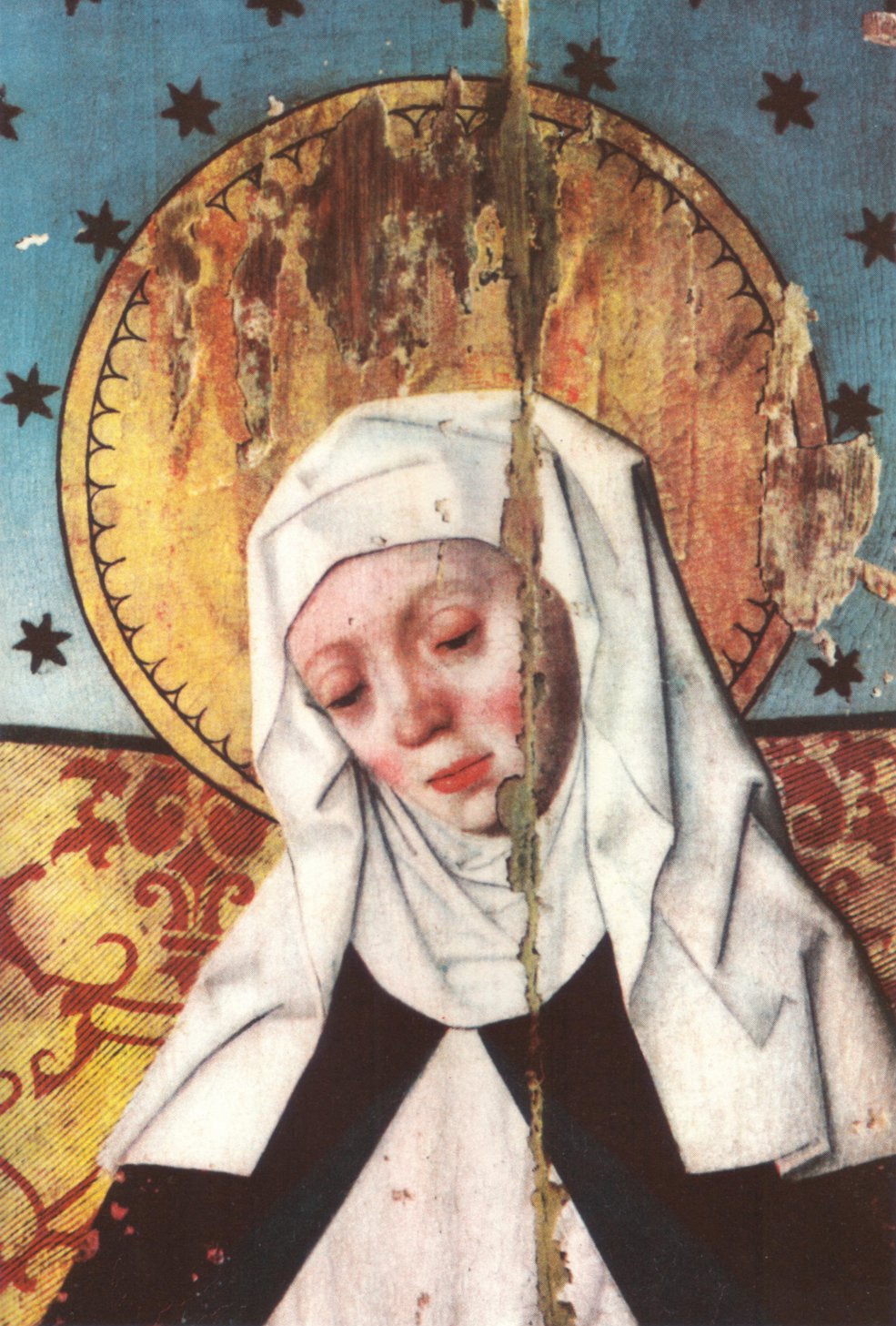
Here are the seven promises Mary made to St. Bridget of Sweden in the fourteenth century, for those who honor her sorrows daily with seven Hail Marys:
- “I will grant peace to their families.”
- “They will be enlightened about the divine Mysteries.”
- “I will console them in their pains and I will accompany them in their work.”
- “I will give them as much as they ask for as long as it does not oppose the adorable will of my divine Son or the sanctification of their souls.”
- “I will defend them in their spiritual battles with the infernal enemy and I will protect them at every instant of their lives.”
- “I will visibly help them at the moment of their death. They will see the face of their mother.”
- “I have obtained this grace from my divine Son, that those who propagate this devotion to my tears and dolors will be taken directly from this earthly life to eternal happiness, since all their sins will be forgiven and my Son will be their eternal consolation and joy.”
You can read more about this in the National Catholic Register.
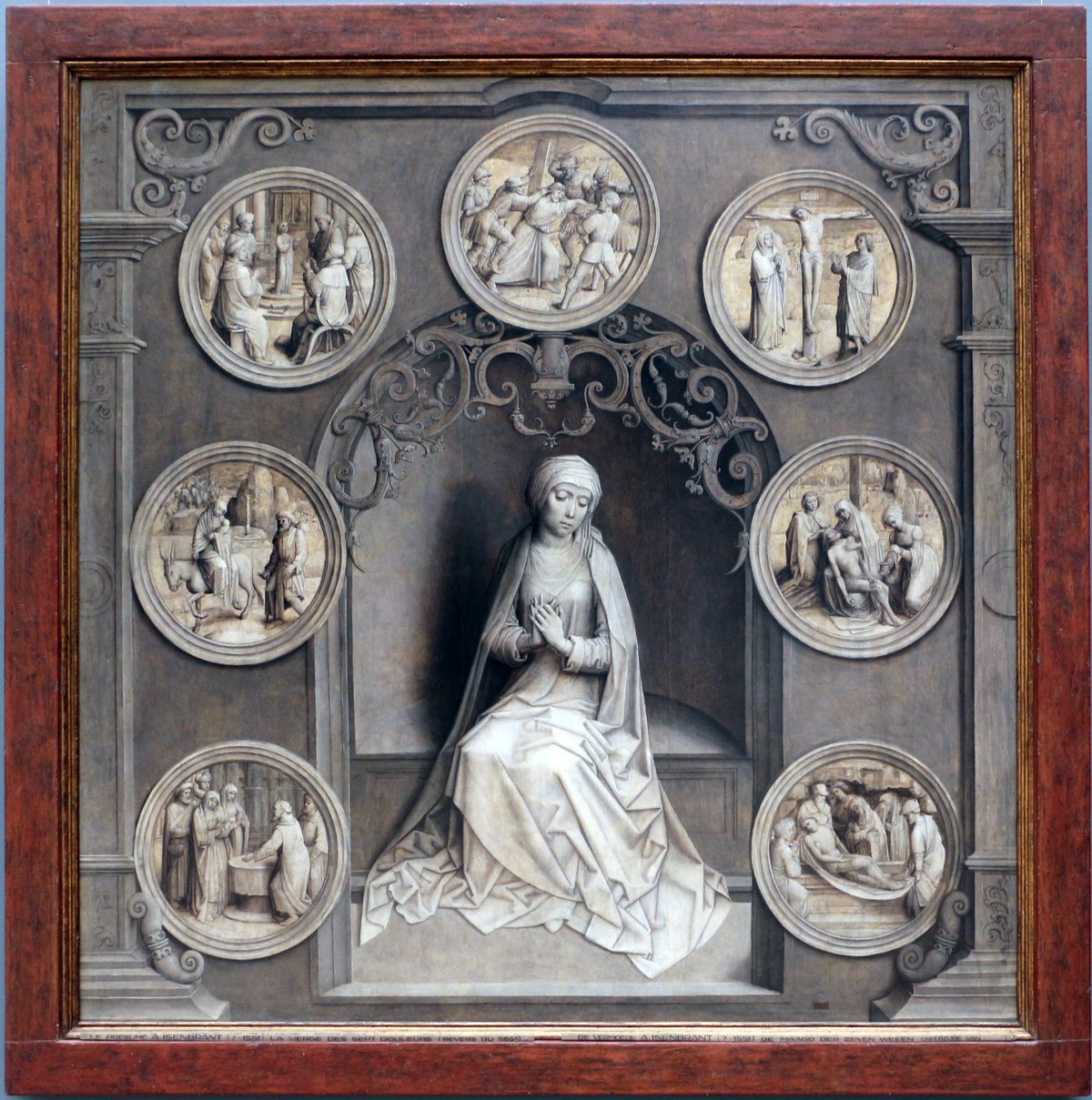
Roundel photographs: Sailko, CC BY 3.0.